The Fundamentals of Towing a Boat Safely
Safely towing a boat requires strict attention to weight distribution, coupler alignment, and vehicle braking capacity before rubber ever hits the highway. Learning how to tow a boat properly begins at the trailer hitch. In most states, highway safety guidelines emphasize that trailer tongue weight should typically sit between 10 and 15 percent of the total combined weight of the boat, motor, fuel, and trailer. Too little weight on the tongue induces dangerous high-speed trailer sway, while excessive weight lifts your tow vehicle's front steering wheels, compromising your braking and emergency maneuvering.
Before departing your driveway, cross your safety chains beneath the trailer tongue in an 'X' pattern so they form a protective cradle in the unlikely event that the coupler detaches from the ball. Ensure that your trailer light harness is firmly seated, your turn signals cycle correctly, and the emergency breakaway cable is clipped directly to the tow vehicle frame rather than around the hitch ball. Your trailer tire pressures must always be checked cold and inflated strictly to the maximum PSI rating listed on the tire sidewall, which reduces excessive sidewall heat buildup during interstate transit.
While underway on open roads, double your following distance behind the vehicle ahead to compensate for the significant momentum of your towed rig. Maintain a steady speed in the right-hand lanes, swing wider through intersections to prevent your trailer wheels from hopping curbs, and anticipate highway off-ramps early. When approaching the boat ramp, take your time backing down. Keep your hand positioned at the bottom of your steering wheel; moving your hand left steers the trailer left, and moving it right steers the trailer right, making slow, methodical adjustments second nature.
Trailer Wheel Bearings and Choosing Marine Grease
Boat trailer wheel bearings face an operating environment far harsher than standard utility trailers because they endure rapid thermal shock every time you launch. After rolling at highway speeds, the hubs heat up; plunging those hot hubs into cold lake or ocean water causes the internal air and metal to contract rapidly. This thermal contraction creates a vacuum that pulls surrounding water past standard rubber seals directly into the roller bearings. Once water contaminates the spindle and races, microscopic pitting begins, quickly leading to bearing seizure and stranded trailers on the shoulder.
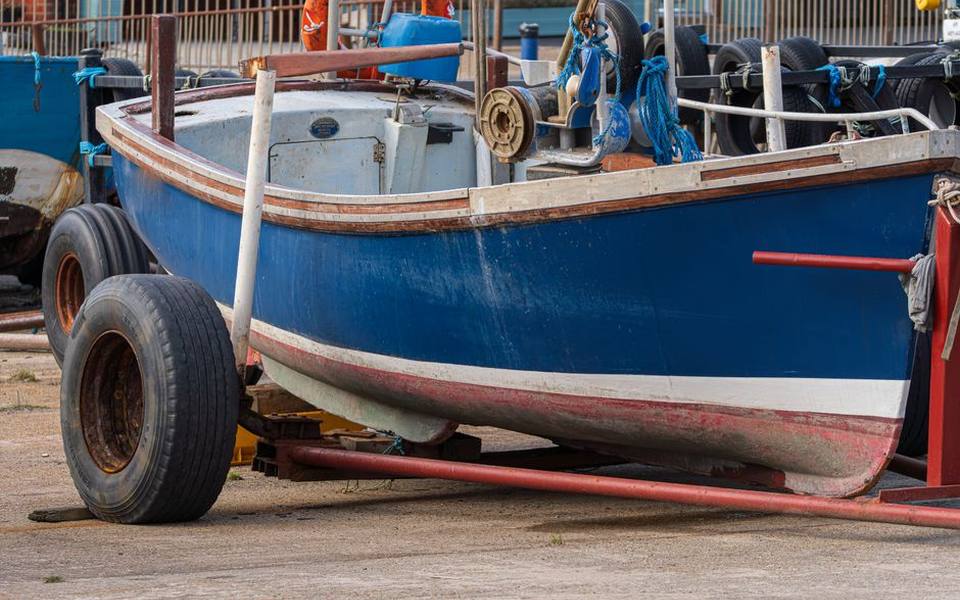
Preventing catastrophic failure depends on repacking your hubs regularly and selecting the best boat trailer bearing grease for marine duty. Standard automotive chassis grease emulsifies and washes out when exposed to submerged environments. The most dependable marine lubricants typically utilize a calcium sulfonate complex or aluminum complex thickening base. These marine-grade formulas provide exceptional water washout resistance, extreme pressure protection, and anti-corrosion additives that halt oxidation even when saltwater manages to breach outer seals. You can readily find heavy-duty grease cartridges and replacement seals through a local marine dealer parts department.
A full bearing service should be performed at least once per season, or whenever grease appears milky or discolored inside the hub dust cap. Remove the cotter pin, castle nut, and spindle washer, then pull the hub to inspect both the inner and outer tapered roller bearings. Clean the rollers in solvent, look closely for blue discoloration indicating heat damage or metal pitting on the races, and hand-pack fresh grease completely through the roller cages until it pushes out the opposite side. When reinstalling, tighten the castle nut to seat the bearings, back it off slightly until the hub spins freely without play, and secure it with a brand-new stainless steel cotter pin.
During long road trips, make a habit of checking your hubs at every fuel stop. A quick physical tap on the dust cap with the back of your hand—or a fast scan using a pocket infrared thermometer—will confirm whether the bearings are running cool. A warm hub is normal after extended highway braking, but a hub that is too hot to hold your hand against indicates insufficient lubrication, failing rollers, or an overtightened castle nut that requires immediate roadside intervention before the wheel seizes entirely.
Cushioning the Hull: Dock Bumpers and Fenders
Protecting your gelcoat or painted aluminum hull once you arrive at the dock requires a reliable barrier against rough wood pilings, steel pylons, and concrete bulkheads. Boaters often mix up terminology, but the best boat fenders are the portable cushions hung directly from your boat's cleats or rails, whereas the best boat bumpers are permanently attached pads and profiles fastened directly to dock docks and marina slip corners. Deploying both types ensures your hull never suffers expensive cosmetic or structural crunching in unpredictable tidal chop or heavy wake zones.
Sizing your fenders correctly depends entirely on the displacement and overall length of your vessel. A standard guideline among marine riggers is that cylindrical fenders should typically offer approximately one inch of diameter for every four to five feet of boat length. For instance, a twenty-foot runabout generally requires fenders with at least a five- to six-inch diameter, while larger vessels require eight-inch or ten-inch models. Round spherical fenders provide exceptional standoff distance and work best when tying off against pilings or when rafting alongside another boat in choppy conditions.
Where and how you tie your fenders makes all the difference in preventing dock rash. Always suspend fenders so the bottom rests roughly one to two inches above the waterline, preventing them from riding up over the dock cap when the boat rocks. Secure them using a clove hitch with two half-hitches on your midship and quarter cleats for easy height adjustments. Avoid tying fenders solely to thin lifeline wires or loose bimini struts, which can bend or snap under sudden wind gusts when your vessel is pinned firmly against the pier.
Lake Fishing Platforms and Hull Choices
Matching your boat to your target waterway ensures both safe towing and enjoyable angling. The best fishing boats for lakes vary considerably depending on the depth, structure, and typical wave heights of the bodies of water you fish. For expansive northern waters known for sudden windstorms and steep whitecaps, aluminum or fiberglass deep-V hulls provide the tall freeboard and sharp forward entry needed to slice through heavy chop while keeping anglers dry. Conversely, calm southern reservoirs and timber-filled impoundments favor modified-V and flat-bottom designs that access skinny back bays effortlessly.
When browsing broad selections of purpose-built fishing boats, consider deck utility alongside hull performance. Serious multi-species lake anglers require wide casting platforms, recessed trolling motor foot pedals, large aerated livewells to keep catch lively in hot weather, and lockable in-floor rod storage lockers that protect valuable tackle from road vibration. A stable beam width ensures the boat resists excessive listing when two adults stand along the same gunwale to land a fish.
Trailering characteristics should also influence your choice of lake boat. Lightweight aluminum hulls place significantly less strain on mid-sized tow vehicles, consume less fuel on long highway pulls, and launch easily from shallow, unpaved gravel ramps where traction is scarce. Heavier multi-species fiberglass rigs require stouter dual-axle trailers with integrated surge or electric brakes, demanding dedicated full-sized tow vehicles but rewarding anglers with rock-solid stability and top-end comfort during rough-water runs across open lake basins.
Electric Propulsion for Kayaks and Micro-Skiffs
Small-water anglers are increasingly turning to compact electric propulsion to reach secluded coves without the physical exhaustion of paddling against stiff headwinds. Selecting the best kayak trolling motor requires balancing motor thrust, total battery weight, and mounting configuration. For most standard fishing kayaks measuring ten to fourteen feet, a 12-volt motor delivering between 30 and 55 pounds of thrust provides more than enough torque to track against river currents and maintain a steady trolling speed of three to four miles per hour.
Mounting options typically fall into three categories: transom brackets, bow mounts, and drop-in pedal-drive replacements. Bow-mounted setups provide superior directional control in windy conditions because pulling a kayak through the water tracks much straighter than pushing it from the stern. However, stern transom mounts are generally easier to install, require less electrical wiring along the deck, and keep the forward casting area completely clear for landing fish and working topwater lures.
Powering your micro-trolling system requires a dependable deep-cycle marine power source. While traditional sealed lead-acid or AGM batteries remain an economical starting point, lightweight lithium iron phosphate (LiFePO4) batteries have become the gold standard for kayak rigging. A lithium battery typically weighs less than half of an equivalent lead-acid unit while delivering consistent voltage throughout its discharge cycle. Always install a waterproof inline circuit breaker rated for your motor's maximum amp draw, and house connections in a sealed battery box to prevent water ingress during launch.
Understanding Overall Boat Pricing Across Segments
Prospective buyers planning their purchase budget quickly discover that the average boat price spans a massive spectrum based on hull construction, factory accessories, and outboard horsepower. For basic entry-level utility craft, such as small aluminum jon boats with modest tillers, purchase costs typically start in the low four figures. Stepping into standard family bowriders, pontoon craft, or mid-tier bay boats typically pushes investments into the mid-five-figure territory depending on propulsion packages and electronic options.
Those seeking premium multi-species tournament machines, offshore center consoles, or performance wakeboard towboats will encounter figures reaching well into six figures. If factory-new showroom tags stretch your comfort zone, exploring well-maintained used boats offers significant financial relief. Late-model pre-owned vessels have already absorbed initial retail depreciation while retaining the vast majority of their operational life, provided the previous owner adhered to strict winterization and scheduled motor services.
When calculating your total initial expenditure, look beyond the sticker price on the hull. Factory freight, dealer rigging fees, state sales tax, registration paperwork, and the cost of the trailer itself frequently add thousands of dollars to the final out-the-door transaction. Factor in essential safety equipment, coast-guard approved life vests, anchors, and dock lines to ensure your vessel is fully legal and lake-ready the moment you drive off the lot.
Valuing Performance Bass Rigs
Bass boats represent a dedicated category where specialized hull designs, blistering speeds, and cutting-edge electronics command premium valuations. Evaluating bass boat prices requires looking closely at hull material, outboard displacement, and auxiliary tournament equipment. Entry-level aluminum bass models with 50- to 115-horsepower outboards typically sit in the accessible mid-range, offering exceptional fuel efficiency, simple towing behind mid-sized SUVs, and rugged hulls that shrug off stump collisions.
High-performance fiberglass bass boats designed for competitive tournaments represent a much higher price tier. These 19- to 21-foot platforms carry 200- to 300-horsepower outboards, hydraulic jack plates, hot-foot throttles, and reinforced transoms engineered for speeds exceeding seventy miles per hour. On the used market, fiberglass rigs hold value remarkably well if the gelcoat is free of spider cracking and the motor displays balanced cylinder compression across all cylinders.
Modern marine technology plays an enormous role in shifting bass boat prices upward. Outfitting a deck with multiple forward-facing sonar displays, linked GPS chartplotters, high-thrust spot-lock trolling motors, and dual shallow-water hydraulic anchors can easily add twenty thousand dollars or more to the final package value. When shopping for either new or pre-owned rigs, determine whether the included marine electronics match your angling style or if you will need to budget for immediate dashboard upgrades.
Financing Structures and Marine Loan Rates
Because marine purchases represent substantial capital investments, most recreational boaters utilize dedicated marine lending products rather than liquidating personal savings. Securing favorable marine financing begins with understanding your credit profile and checking competitive marine loan options. Marine lenders specialize in evaluating recreational assets, offering loan amortization schedules that extend much longer than typical automotive financing to keep monthly payments manageable.
Current market conditions heavily influence financing costs, and borrowers frequently research the average interest rate for a boat loan before visiting dealerships. In typical lending environments, average boat loan rates generally range between 7 and 11 percent, depending on the applicant's credit score, loan amount, and loan duration. Borrowers boasting top-tier credit ratings and substantial down payments typically secure average boat loan interest rate terms at the lower end of that spectrum, whereas older collateral or smaller loan balances tend to carry higher percentage points.
Down payment requirements for marine loans typically mandate between 10 and 20 percent of the total purchase price in cash or verified trade equity. Loan terms can range from five years for small aluminum packages up to fifteen or even twenty years for high-dollar cruisers and fiberglass tournament rigs. While stretching loan terms out to fifteen or twenty years lowers your monthly obligation, keep in mind that doing so increases total interest paid over the life of the note and requires careful monitoring of depreciation to avoid negative equity.
Annual Insurance Premiums and Coverage Elements
Protecting your marine investment requires specialized coverage that addresses road transit, open-water navigation, and winter layup periods. The average price for boat insurance typically falls between 300 and 1,000 dollars annually for mainstream runabouts, bass boats, and pontoon craft. However, premiums can exceed this range for high-performance hulls, twin-engine offshore boats, or vessels permanently moored in coastal hurricane zones subject to named-storm deductibles.
Underwriters calculate your specific rate based on several critical risk variables. The primary factors include your vessel's total insured value, top speed capability, overall length, operational waters (freshwater inland lakes versus offshore coastal sounds), and your personal claims history on both auto and marine policies. Completing an approved state or coast guard auxiliary boater safety course typically unlocks modest discounts on your annual premium.
Always evaluate the difference between an 'Agreed Value' and an 'Actual Cash Value' insurance policy. An agreed value policy guarantees you receive the stated hull amount in the event of a total loss without depreciation deductions, whereas actual cash value factors in market depreciation and wear-and-tear before payout. Furthermore, verify that your policy explicitly covers road towing perils, catastrophic trailer damage, on-water salvage and towing assistance, and fuel spill liability protection, which protects you from massive environmental fines if a submerged hull leaks fuel.
Complete Pre-Launch Towing and Maintenance Protocol
Establishing a repeatable safety routine before leaving your driveway guarantees that you spend your weekend enjoying the water rather than wrestling with broken hardware on an interstate shoulder. Begin with a comprehensive 360-degree walkaround of your trailer while it is hitched to your tow vehicle. Check every lug nut with a calibrated torque wrench, confirm that your coupler latch pin is secured with a safety bail, and visually inspect your winch strap for fraying or UV rot where it hooks to the boat bow eye.
Verify that your transom tie-down straps are cranked down firmly to prevent the stern of your boat from bouncing off the trailer bunks over highway frost heaves. Remove loose gear, cooler lids, and cockpit cushions that could blow out at sixty miles per hour. If your trailer has surge brakes, ensure the brake lockout key is removed for highway transit so your hydraulic actuator functions immediately when your tow vehicle decelerates.
When maintenance challenges exceed your home garage tools, rely on a certified dealership service department to inspect your trailer axle alignment, replace worn leaf springs, and rebuild aging brake calipers. Having professional technicians inspect your wheel hubs and hydraulic braking system annually ensures that your trailer tracks true, stops predictably, and protects both your family and your boat on every expedition.
Published 2026-09-20 · reviewed with each rebuild, last September 2026.
Find boat dealers near you
The directory lists 7,311 boat dealers by state and city — pick your state or use the “Near me” button in the header.
More guides
-
 Storage
Boat Storage and Slip Costs: Dry Storage, Mooring, and Marina Rates Guide
-
 Money
MoneyHow Much Does a Boat Engine Cost? Complete Marine Motor Pricing Guide
-
 Buying
How Much Does a Pontoon Boat Cost to Buy or Rent?
-
 Service
Cosmetic Maintenance, Surface Repairs, and Deck Restorations: A Practical Marine Guide
-
 Owning
Marine Electrical Systems, Critical Hardware, and Modern Repower Planning
-
 Service
Essential Boat Mechanical Repairs: Managing Cables, Pumps, and Routine Service
-
 Owning
Understanding Your Boat's Plumbing, Fuel Systems, and Ownership Costs
-
 Owning
How to Handle Boat Registration, Title Transfers, and USCG Documentation
-
 Owning
Complete Off-Season Preparation: Storage Steps, Costs, and Protective Canvas
-
 Safety
The Essential Boating Safety Equipment Checklist, Education Guide, and Ownership Budgeting
-
 Money
MoneyUnderstanding Marine Loans: Rates, Terms, and Approval
-
 Buying
Center Console vs. Bowrider Boats: Layouts, Costs, and Finding the Right Fit
-
 Buying
What Is a Marine Survey and How Much Does It Cost?
-
Buying
Yacht Buying, Chartering, and Brokerage Guide
-
Owning
Boat Trailers, Launching, and Ramp Etiquette Guide
-
Buying
Complete Used Boat Buying Guide: Valuations, Inspection, and Bill of Sale
-
Buying
The Complete Pontoon and Tritoon Guide: Layouts, Brands, and Ownership
-
Buying
Jon Boats and Small Aluminum Fishing Boats: Complete Buyer and Build Guide
-
Buying
Bass Boats and Freshwater Fishing Boats Buyer's Guide
-
Buying
Outboard Motors Guide: Yamaha, Suzuki, Mercury Specs and Used Buying
-
Money
Navigating Boat Loans and Marine Financing: Rates, Loan Terms, and Monthly Payment Realities
-
Owning
Boat Clubs vs. Rentals and Charters: Which Waterway Option Fits You?
-
Service
The Complete Guide to Boat Maintenance, Winter Storage, and Mechanical Repairs
-
 Safety
Boating Safety Courses, Licenses, and Certification Guide
-
Buying
Catamarans Guide: Sailing, Power, Hobie, and Buying Options
-
Owning
Marine Batteries Buyer's Guide: Deep Cycle, Lithium, AGM, and Dual Purpose
-
Buying
Electric Trolling Motors: Complete Guide for Kayaks, Pontoons, and Fishing Boats
-
 Owning
Complete Boat Rental Guide: Destinations, Types, and Rates
-
 Service
Boat Fuel Systems and Injector Care: Tanks, Filters, and Cleaning
-
 Buying
Center Console Boats: Types, Construction, and Buying Guide
-
 Owning
Boat Docks, Lifts, and Flotation Systems: Complete Waterfront Guide
-
 Buying
A Complete Guide to Fishing Boats, Sonar Electronics, and Rod Rigging Systems
-
 Owning
Outboard Motors, Jack Plates, and Marine Propellers: The Complete Rigging Guide
-
 Buying
A Complete Guide to Boat Brands, Marine Brokers, and Finding the Right Dealer
-
 Money
MoneyBoat Insurance, Financing, and Title History Lookup: Complete Guide
-
 Buying
Small Boats, Kayaks, Canoes, and Inflatable Craft: Complete Buyer and Rigging Guide
-
 Owning
Marine Canvas, Bimini Tops, and Boat Covers: Selection and Care Guide
-
 Buying
Complete Guide to Boat Shows: Dates, Tickets, and Top US Events
-
 Owning
Boat Anatomy 101: Hull Parts, Steering Wheels, and Terminology