The fundamentals of modern boat electrical systems
A boat depends on its electrical storage for both mechanical safety and onboard comfort, yet marine power systems face harsher conditions than almost any automotive application. Constant wave pounding, high ambient humidity, corrosive salt air, and long periods of seasonal inactivity place severe demands on onboard energy storage. Choosing the right energy source starts with recognizing that no single battery design performs every task on the water equally well.
Marine electrical setups typically separate energy demands into two broad duties: turning over a high-compression internal combustion engine and providing sustained electrical current to accessories over several hours. Engine starting demands an intense burst of amperage for just a few seconds, whereas electronics, navigation lights, livewell pumps, and trolling motors require a steady, moderate draw until the battery is significantly depleted.
Because these electrical requirements conflict mechanically, modern vessels generally configure their banks around specific tasks. A single power bank may suffice on a basic runabout, but larger hulls and offshore rigs rely on dedicated banks connected through isolation systems. Selecting the correct replacement involves understanding plate construction, internal chemistry, charge acceptance, and how your boat's alternator and shore charging hardware interact with each cell.
Marine starting batteries and cranking capacity
A marine cranking battery is engineered specifically to deliver massive electrical energy in a two- to five-second pulse to spin an engine's starter motor. To accomplish this, the internal cells feature numerous thin lead plates packed tightly together, creating the maximum possible surface area for the electrolyte to contact simultaneously. This high surface area allows the chemical reaction to discharge hundreds of amps instantly without dropping system voltage below what the ignition module requires.
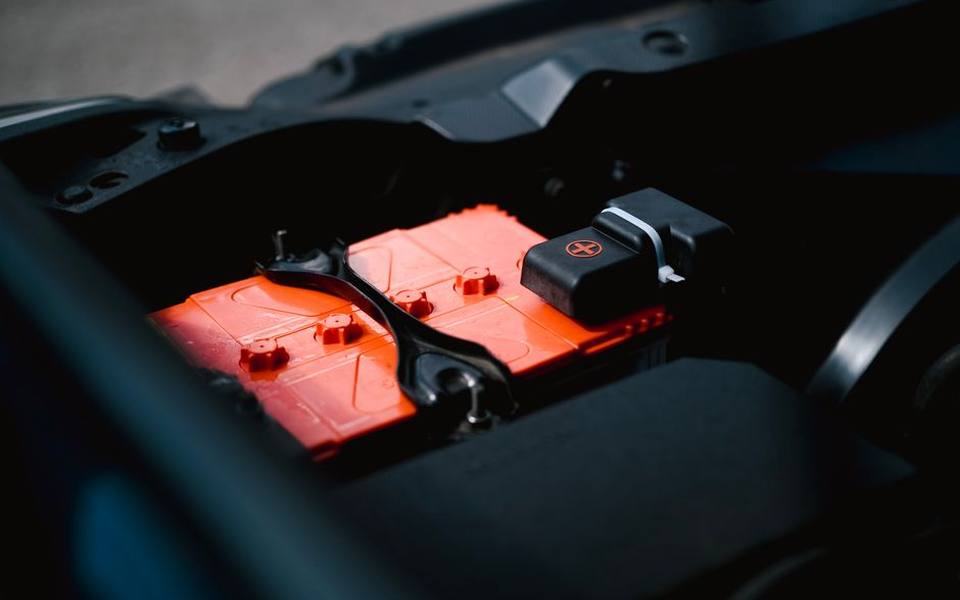
When evaluating a marine starting battery, the primary ratings to look for are Cold Cranking Amps (CCA) and Marine Cranking Amps (MCA). MCA measures the discharge output at thirty-two degrees Fahrenheit, which reflects typical boating conditions, while CCA measures output at zero degrees. Outboard and inboard engine manufacturers specify a minimum cranking rating in their technical manuals, and falling below that baseline often causes erratic starter engagement, voltage drops that reset modern chartplotters, or engine control module faults.
The fundamental trade-off of a starting design is physical fragility under sustained load. Because the lead plates are thin and sponge-like, repeated deep discharges cause the active material to shed rapidly from the grids and settle at the bottom of the case. Drawing a standard cranking unit down past roughly twenty percent of its capacity can permanently shorten its operating life, making it entirely unsuitable for running trolling motors or evening anchor lights.
Deep cycle power for trolling and continuous loads
Unlike starting designs, marine deep cycle batteries are constructed to endure hundreds of repeated discharge and recharge events without losing capacity. Inside each cell, heavy lead plates with dense active material withstand the mechanical stresses of deep electrical depletion. Rather than delivering a sudden surge of hundreds of amps, a deep marine cycle battery provides a dependable, sustained flow of power over hours at a time.
These units are rated primarily in Amp-Hours (Ah) or Reserve Capacity (RC) rather than cranking metrics. Reserve Capacity indicates how many minutes the unit can deliver a steady twenty-five-amp draw before the terminal voltage drops below 10.5 volts. Whether you are running multiple multi-function displays, livewell aerators, radar domes, or a multi-voltage bow-mounted trolling motor, sustained energy delivery depends entirely on the robust internal architecture of a deep discharge marine battery.
Discharging a conventional flooded deep-cycle unit down to roughly fifty percent of its total capacity is standard practice, though higher-quality chemistries can tolerate deeper drawdown. Consistently pulling a standard lead-acid cycle unit below that threshold accelerates plate sulfation and reduces total cycle life. When shopping for replacements through a parts counter at a local marine dealer, matching physical group dimensions with true amp-hour capacity ensures your gear runs all day without mid-afternoon voltage drops.
The role and limitations of dual-purpose designs
Dual-purpose marine batteries attempt to bridge the gap between starting power and endurance cycling by using plates of medium thickness. They contain enough surface area to yield respectable cranking amps for small- to mid-sized outboards while retaining sufficient plate mass to survive moderate accessory cycling. They represent a common factory installation in family runabouts, entry-level fishing boats, and smaller ski boats where physical space for multiple cases is restricted.
While a dual-purpose unit is versatile, it represents a mechanical compromise on both fronts. It cannot deliver the extreme peak cranking power of a dedicated starter of the same physical group size, nor can it match the total cycle life or deep reserve of a genuine deep discharge marine battery. In demanding setups, such as professional angling craft or offshore vessels with heavy radar loads, dual-purpose units often exhibit premature wear if subjected to deep daily drawdown.
For owners of smaller boats with simple single-engine setups and minimal electronic demands, a dual-purpose unit remains an economical and space-efficient solution. It simplifies battery management by eliminating the need for complex selector switches or onboard charging combiners. However, if your typical day on the water involves drifting for hours with the stereo playing and fishfinders running, stepping up to a dedicated two-bank setup is generally the more reliable path.
Flooded lead-acid versus absorbed glass mat technology
Traditional flooded lead-acid boat batteries remain popular primarily because of their low initial purchase cost. These cells utilize liquid sulfuric acid electrolyte surrounding suspended lead plates. Because gases escape through removable or sealed vents during charging, flooded units require good ventilation and, in serviceable designs, routine inspection of distilled water levels. They are sensitive to extreme vibration and can spill corrosive acid if tilted significantly during rough sea conditions.
An agmbattery addresses nearly all physical vulnerabilities of flooded designs by suspending the liquid electrolyte within micro-fiberglass mat separators pressed tightly between the lead plates. This construction makes an absorbed glass mat cell spill-proof, virtually maintenance-free, and remarkably resistant to the heavy pounding common in fast planing hulls. Because the internal resistance of AGM is lower than flooded cells, these batteries accept incoming charge more rapidly and deliver higher burst current for a given case size.
AGM technology also exhibits a much lower self-discharge rate, often losing only one to three percent of its stored energy per month when disconnected, compared to up to ten percent or more in flooded units. This quality makes AGM an outstanding option for owners who keep vessels in seasonal slip facilities or dry storage. The main drawback is that AGM designs cost more initially and are sensitive to overcharging, requiring modern multi-stage charging equipment with proper voltage regulation.
The rise of lithium-ion marine chemistry
In recent years, the marine industry has increasingly embraced lithium technology, specifically Lithium Iron Phosphate (LiFePO4). A lithium ion marine battery provides dramatic performance advantages over conventional lead-based chemistries, beginning with weight. A typical lithium bank weighs less than half of an equivalent lead-acid system, reducing transom weight, improving hull draft, and boosting fuel efficiency or top-end speed on performance-oriented craft.
Beyond weight reduction, a li ion marine battery delivers flat voltage discharge curves. While lead-acid voltage drops steadily as it discharges—causing trolling motors to lose thrust and pump outputs to fade—lithium maintains stable voltage above twelve volts until the cell is almost entirely drained. Furthermore, owners can safely utilize eighty to ninety percent of a lithium pack's rated capacity without damaging the cells, compared to roughly fifty percent practical capacity in flooded lead systems.
The operational life of marine batteries lithium builds can reach several thousand discharge cycles, lasting significantly longer than lead alternatives under heavy use. However, these systems require an internal Battery Management System (BMS) to protect against short circuits, overcharging, and extreme temperatures. Because lithium cells should not be charged at temperatures below freezing, cold-weather anglers must look for models featuring internal heating pads or maintain heated winterized storage.
Charging profiles, alternators, and multi-bank chargers
Selecting the right battery chemistry is only half the battle; ensuring proper marine battery charges requires matching your onboard power generation to the specific needs of each cell type. Lead-acid, AGM, and lithium chemistries demand distinct charging algorithms, typically involving bulk, absorption, and float stages. Applying a traditional high-voltage flooded profile to a sealed AGM unit can boil the electrolyte dry, while an improper profile applied to lithium will prevent the cells from reaching full balancing potential.
Modern smart multi-bank onboard chargers allow boaters to select different chemistry settings on individual output leads. This flexibility is critical when a vessel pairs an AGM starting cell with a bank of lithium deep-cycle units for the electric trolling motor. Investing in a marine-grade charger with waterproof potting, ignition protection, and temperature compensation safeguards both the batteries and the boat's wiring infrastructure against thermal runaway.
Engine alternators present another critical consideration when switching battery chemistries. Because lithium cells accept charge at extremely high amperage with minimal internal resistance, they can overwork an outboard or inboard alternator at low idle speeds, potentially causing the charging stator to overheat. Installing a direct-current-to-direct-current (DC-to-DC) charger between the starting lead and the house lithium bank regulates the incoming amperage and protects the engine charging circuit.
Battery isolation, switches, and dual-bank management
A properly engineered marine electrical system isolates starting duties from domestic house loads so that an afternoon at anchor never strands you with a dead engine. The most common arrangement involves a heavy-duty battery switch with positions for 'Off', '1', '2', and 'Both' (or '1/2/Combine'). Running accessories off the house bank while keeping the cranking bank untouched guarantees starting reserve regardless of how long the cabin stereo or livewell pumps have been operating.
To automate this management, many boaters install an Automatic Charging Relay (ACR) or Voltage Sensitive Relay (VSR). An ACR monitors the starting battery voltage while the engine is running; once the primary cranking unit is fully replenished, the relay automatically closes to share excess alternator output with the house or trolling bank. When the engine shuts down and system voltage drops, the relay uncouples the banks instantly, isolating starting power.
For complex refits or multi-engine setups, consulting a certified service department ensures cables, fuses, and high-amp bus bars meet American Boat and Yacht Council (ABYC) safety guidelines. Improperly sized battery cables can create substantial voltage drop across long runs, generating dangerous heat inside enclosed bilges where flammable fuel vapors might occasionally linger.
Maintenance routines, testing, and off-season storage
Routine maintenance prevents sudden electrical failures on the water. Boaters should inspect terminals regularly for white or blue-green sulfate crust, loose terminal wingnuts, or cracked plastic casing. Marine terminals should always be secured with stainless steel hex nuts and lock washers rather than standard hand-tightened wingnuts, as engine vibration frequently shakes wingnuts loose, causing intermittent electrical connections and high-resistance arcing.
Testing battery health requires different tools depending on internal chemistry. Flooded cells can be measured accurately with a temperature-compensated optical refractometer or hydrometer to check electrolyte specific gravity. AGM and conventional batteries are best evaluated with an active digital conductance tester, which measures internal plate resistance rather than merely checking open-circuit resting voltage across the posts.
Before scheduling your vessel for professional winterization service, bring all banks to full charge. Lead-based cells stored in an uncharged state are prone to freezing in sub-zero climates, which cracks internal plate structures and ruptures outer plastic casings. Disconnecting the negative ground cable or turning master disconnect switches off prevents parasitic draws from stereo memory circuits or bilge sensors from draining the bank during several months of storage.
Sizing your onboard battery capacity correctly
Determining the proper battery bank capacity requires calculating an electrical energy budget based on how you use your vessel. List every electrical consumer on board, multiply its nominal amp draw by the estimated hours of use between engine runs or shore connections, and sum the total amp-hours required. For lead-acid banks, double that calculated amp-hour total to account for the fifty-percent depth-of-discharge limit, ensuring your bank retains longevity.
Physical group sizes—standardized by the Battery Council International (BCI)—dictate whether a replacement unit fits your existing battery tray. Common marine sizes range from compact Group 24 and Group 27 up to larger Group 31 units, each offering progressively higher reserve capacities. When upgrading to larger physical cases or adding auxiliary banks, check whether tray fasteners, hold-down brackets, and ventilation clearances remain compliant with Coast Guard regulations.
Prospective buyers evaluating used boats should inspect the age stamps and chemistry combinations currently installed in the bilge. Mismatched battery ages or differing chemistries hard-wired in parallel can cause newer cells to discharge into weaker ones, degrading overall system reliability. Replacing tired power packs with correctly sized, high-quality units is one of the most effective ways to restore confidence whenever you leave the dock.
Published 2026-09-20 · reviewed with each rebuild, last September 2026.
Find boat dealers near you
The directory lists 7,311 boat dealers by state and city — pick your state or use the “Near me” button in the header.
More guides
-
 Storage
Boat Storage and Slip Costs: Dry Storage, Mooring, and Marina Rates Guide
-
 Money
MoneyHow Much Does a Boat Engine Cost? Complete Marine Motor Pricing Guide
-
 Buying
How Much Does a Pontoon Boat Cost to Buy or Rent?
-
 Service
Cosmetic Maintenance, Surface Repairs, and Deck Restorations: A Practical Marine Guide
-
 Owning
Marine Electrical Systems, Critical Hardware, and Modern Repower Planning
-
 Service
Essential Boat Mechanical Repairs: Managing Cables, Pumps, and Routine Service
-
 Owning
Understanding Your Boat's Plumbing, Fuel Systems, and Ownership Costs
-
 Owning
How to Handle Boat Registration, Title Transfers, and USCG Documentation
-
 Owning
Complete Off-Season Preparation: Storage Steps, Costs, and Protective Canvas
-
 Safety
The Essential Boating Safety Equipment Checklist, Education Guide, and Ownership Budgeting
-
 Money
MoneyUnderstanding Marine Loans: Rates, Terms, and Approval
-
 Buying
Center Console vs. Bowrider Boats: Layouts, Costs, and Finding the Right Fit
-
 Safety
How to Tow a Boat Safely and Maintain Trailer Wheel Bearings
-
 Buying
What Is a Marine Survey and How Much Does It Cost?
-
Buying
Yacht Buying, Chartering, and Brokerage Guide
-
Owning
Boat Trailers, Launching, and Ramp Etiquette Guide
-
Buying
Complete Used Boat Buying Guide: Valuations, Inspection, and Bill of Sale
-
Buying
The Complete Pontoon and Tritoon Guide: Layouts, Brands, and Ownership
-
Buying
Jon Boats and Small Aluminum Fishing Boats: Complete Buyer and Build Guide
-
Buying
Bass Boats and Freshwater Fishing Boats Buyer's Guide
-
Buying
Outboard Motors Guide: Yamaha, Suzuki, Mercury Specs and Used Buying
-
Money
Navigating Boat Loans and Marine Financing: Rates, Loan Terms, and Monthly Payment Realities
-
Owning
Boat Clubs vs. Rentals and Charters: Which Waterway Option Fits You?
-
Service
The Complete Guide to Boat Maintenance, Winter Storage, and Mechanical Repairs
-
 Safety
Boating Safety Courses, Licenses, and Certification Guide
-
Buying
Catamarans Guide: Sailing, Power, Hobie, and Buying Options
-
Buying
Electric Trolling Motors: Complete Guide for Kayaks, Pontoons, and Fishing Boats
-
 Owning
Complete Boat Rental Guide: Destinations, Types, and Rates
-
 Service
Boat Fuel Systems and Injector Care: Tanks, Filters, and Cleaning
-
 Buying
Center Console Boats: Types, Construction, and Buying Guide
-
 Owning
Boat Docks, Lifts, and Flotation Systems: Complete Waterfront Guide
-
 Buying
A Complete Guide to Fishing Boats, Sonar Electronics, and Rod Rigging Systems
-
 Owning
Outboard Motors, Jack Plates, and Marine Propellers: The Complete Rigging Guide
-
 Buying
A Complete Guide to Boat Brands, Marine Brokers, and Finding the Right Dealer
-
 Money
MoneyBoat Insurance, Financing, and Title History Lookup: Complete Guide
-
 Buying
Small Boats, Kayaks, Canoes, and Inflatable Craft: Complete Buyer and Rigging Guide
-
 Owning
Marine Canvas, Bimini Tops, and Boat Covers: Selection and Care Guide
-
 Buying
Complete Guide to Boat Shows: Dates, Tickets, and Top US Events
-
 Owning
Boat Anatomy 101: Hull Parts, Steering Wheels, and Terminology