The Purpose and Scope of a Marine Survey
A marine survey is a detailed, independent examination of a recreational or commercial vessel to evaluate its physical condition, safety compliance, structural integrity, and overall fair market value. Unlike a quick dealer visual inspection, a comprehensive pre-purchase survey examines the hull, deck framing, stringers, mechanical systems, fuel delivery setups, running gear, and onboard electrical circuits. Marine surveyors use specialized tools such as moisture meters, percussion sounding hammers, infrared cameras, and engine diagnostics to detect hidden delamination, moisture intrusion, or structural decay before funds exchange hands.
Most boat buyers commission a survey during a pre-purchase contingency period when shopping through used boat dealers or private sellers. This contingency gives the prospective owner legal grounds to renegotiate the purchase price, request safety repairs, or walk away entirely with their deposit intact if serious defects emerge. Surveyors act as unbiased inspectors who work strictly for the party paying their invoice, ensuring that you receive an objective breakdown of structural flaws, obsolete gear, and required maintenance.
The resulting documentation is a formal written report listing all findings categorized by urgency, alongside an estimated replacement cost and current market valuation. Standards established by the American Boat and Yacht Council and the National Association of Marine Surveyors guide these evaluations. Whether you are considering an offshore cruiser or a smaller family runabout, commissioning a formal assessment ensures that you do not inherit someone else's deferred maintenance nightmares or hazardous safety oversights.
Marine Survey Cost Factors and Typical Pricing
Marine survey costs typically range between twenty and thirty-five dollars per linear foot of boat length, though regional rates vary based on local harbor fees and vessel complexity. For a standard twenty-four-foot coastal boat, an independent inspection generally totals between five hundred and eight hundred dollars for the surveyor's field work and written report. Larger twin-engine cruisers, motor yachts with complex AC generators, or boats featuring wooden structural members often carry higher hourly fees or elevated per-foot rates due to the extensive systems testing required.
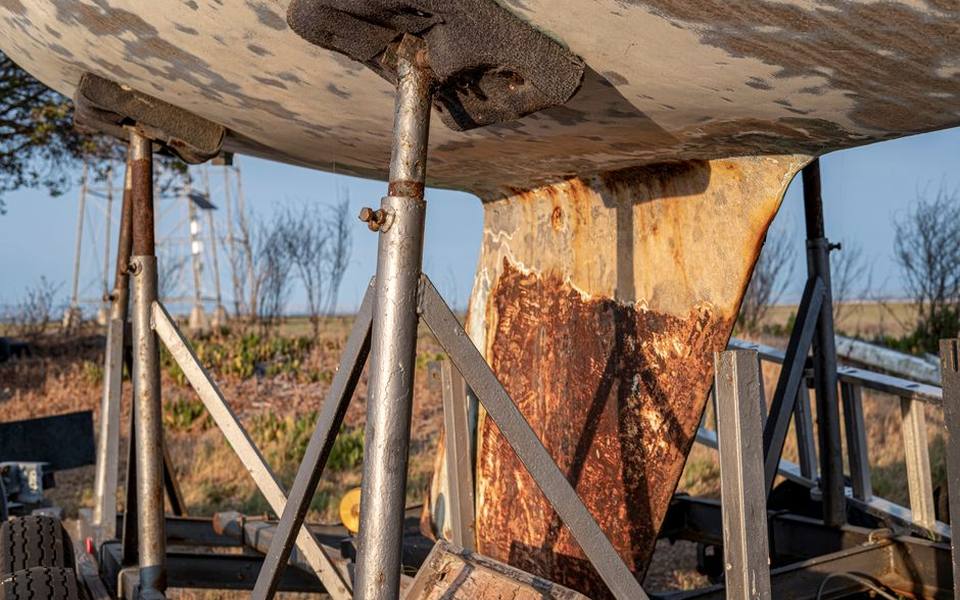
Haul-out expenses represent an additional out-of-pocket cost that buyers must budget for separately from the surveyor's professional fee. To inspect running gear, props, rudders, through-hull fittings, and structural bottom laminates, the boat must be lifted out of the water at a marina travel lift or boatyard. Yard haul-out fees typically add another ten to twenty dollars per foot depending on the facility, while short-haul hang fees on the travel lift slings allow the surveyor to inspect and tap the bottom before the boat returns to the water for sea trials.
Auxiliary engine diagnostics may also alter your final billing if you request comprehensive mechanical oil analysis or engine compression checks. While basic marine surveys include visual checks and operational testing of running machinery, dedicated engine oil sampling typically costs forty to seventy dollars per fluid test. Investing in these additional tests pays for itself by catching cylinder head issues, raw-water heat exchanger leaks, or contaminated lower unit gear oils before finalizing a contract.
Insurance Standards and Survey Requirements
Major marine underwriters routinely demand a formal condition and valuation survey before issuing comprehensive hull coverage or agreed-value physical damage policies on vessels over ten to fifteen years old. The best boat insurance companies look specifically for fire hazards, outdated fuel lines, unbonded brass seacocks, and uncertified electrical modifications that increase claim risk. Without an accepted survey completed within the previous twelve to twenty-four months, underwriters may decline coverage entirely or restrict the policy to basic watercraft liability.
Survey findings are commonly ranked into priority tiers: structural or life-safety violations that violate federal regulations, secondary maintenance items that require attention within a specific operating season, and cosmetic suggestions. Marine insurers generally issue coverage contingent upon receiving signed work orders or mechanic receipts proving that all priority items have been resolved. These stipulations protect both the owner and the underwriter from catastrophic sinkings caused by aged bellows, rotted bilge hoses, or corroded electrical grounding buses.
Lenders operating through boat dealers offering financing adhere to similar underwriting guidelines before authorizing marine loans. Because the vessel serves as collateral, the finance company requires independent proof that the vessel's fair market value equals or exceeds the loan balance. A surveyor's valuation formula accounts for recent local sales data, hull condition, machinery hours, and installed electronics, giving the lender a verified assessment of the asset.
Battery Performance and Electrical Testing
A critical component of any marine survey involves stress-testing the vessel's direct-current electrical distribution system, starting with the primary engine power supplies. The best marine starting battery designs must deliver sufficient Cold Cranking Amps and Marine Cranking Amps under load to turn high-compression outboard or inboard engines in cold weather. Surveyors inspect battery hold-downs, sealed terminal boots, and state of charge, checking whether the installed cranking battery maintains voltage stability during ignition without dropping below safe electronic thresholds.
Beyond individual cranking capacity, surveyors assess how the vessel manages power between starting banks and house electronics. Dedicated dual-purpose or starting-specific units feature thinner, closely spaced lead plates designed for high burst energy rather than deep discharge cycles. If an owner accidentally runs sensitive multifunction displays, livewell pumps, and stereos off the best marine cranking battery instead of an isolated deep-cycle bank, battery lifespan degrades rapidly, leading to dead cells and potential starting failures on the water.
Surveyors also inspect battery boxes for proper acid containment and passive ventilation to prevent dangerous hydrogen gas accumulation during fast-charge cycles. Corrosion on primary cable terminals, improper gauge wiring, and missing terminal covers represent frequent electrical survey infractions. Verifying that replacement batteries match the engine manufacturer's minimum cold cranking amp rating ensures dependable starts and protects costly starters and alternators from early failure.
Evaluating Small Utility Crafts and Jon Boats
Smaller utility crafts like utility flat-bottom boats require a tailored survey approach focused on hull seams, transom integrity, and lightweight aluminum alloys. The best jon boats feature heavy-gauge marine aluminum, reinforced corner caps, and structural bench bracing designed to withstand river shoals, stump fields, and shallow estuary use. When inspecting these shallow-draft workhorses, surveyors examine the bottom for warped ribs, dented chines, and stress cracks along the center weld seams caused by trailering vibration or bottom strikes.
Transom rot is a common hidden defect on pre-owned utility aluminum rigs where wooden core inserts are sandwiched between aluminum sheets to hold clamping outboards. Water often seeps past outboard mounting bolts, drain tubes, or transducer screws, rotting the internal marine plywood while the external aluminum remains intact. A simple hammer-tap test and moisture probe can determine whether a transom core is structurally solid or flexing under engine thrust, which could cause catastrophic transom separation under power.
Surveyors also inspect the condition of floor flotation foam on modified flat-bottom craft, as waterlogged two-part polyurethane foam can trap dozens of extra pounds beneath deck panels. Saturated foam increases draft, diminishes top-end speed, and fosters galvanic corrosion between hidden aluminum ribs and the damp foam cells. Catching structural damage or hidden deck rot early allows prospective buyers to negotiate needed repairs through boat dealers with service & repair departments.
Aluminum Fishing Boats and Corrosion Vulnerabilities
Surveying riveted and welded aluminum fishing rigs requires checking for galvanic corrosion, electrolysis, and hidden structural fatigue along bottom strakes. The best aluminum fishing boats utilize marine-grade 5052 or 5086 alloy plates with double-riveted or continuously welded hull seams designed to absorb chop on large inland lakes. Surveyors inspect through-hull rivets for sheared heads, looseness, or weeping water tracks that indicate hull flexing and loosened structural rivets across main load-bearing frames.
Galvanic corrosion represents one of the most destructive forces on aluminum fishing craft, often triggered by stray electrical currents, missing sacrificial zincs, or copper-based bottom paint. Surveyors measure hull potential using digital multimeters and silver-chloride half-cell reference electrodes to confirm the vessel is properly bonded. Pitting corrosion along transom corners, spray rails, and engine bracket mounts reveals whether the boat has been subjected to stray shore power currents or kept in saltwater without proper sacrificial anodes.
Whether you are evaluating a deep-V aluminum multispecies boat or a specialized bass rig, the surveyor checks livewell plumbing, bilge aeration lines, and deck drainage scuppers. Submerged livewell hoses and cheap plastic thru-hull fittings can become brittle from ultraviolet light, creating serious flooding risks if they crack beneath the waterline. Verifying that all below-water plumbing features double stainless hose clamps and accessible shut-off valves protects your investment from common water intrusion failures.
Wake Boat Valuation, Ballast Systems, and Pricing Trends
Inboard towboats and specialized watersports platforms face unique structural stresses from integrated ballast tanks, high-torque V-drive transmissions, and wake-shaping surf tabs. When evaluating an Axis wake boat price on the pre-owned market, surveyors look beyond gelcoat aesthetics to inspect the integrity of sub-floor stringers, engine cradle mounts, and tower attachment points. Pre-owned prices for these wakecraft depend heavily on engine operating hours, ballast pump maintenance, touchscreen software functionality, and winterization documentation.
Wake-shaping systems utilize thousands of pounds of internal water ballast to push the transom deep into the water, placing immense hydraulic load on hull stringers and drive shafts. Surveyors inspect ballast transfer pumps, reversible impellers, vent lines, and check valves to identify hidden leaks that could flood bilge compartments during active sessions. Worn rudder port packings, dripless shaft seals, and propeller shaft alignment also undergo scrutiny, as out-of-true drive shafts create structural hull vibration and premature cutless bearing wear.
Buyers comparing available options across boats for sale and marine inventory should review whether the wake tower has loose backing plates or stress cracks in the fiberglass laminate around mounting pads. A thorough survey ensures that the wake boat has not suffered structural delamination from pulling heavy ballast tubes or operating in rough open water while loaded past safe weight distributions.
Evaluating Safety Equipment and Practical Deck Gear
A comprehensive marine survey includes a systematic inventory of mandatory United States Coast Guard safety gear and deck equipment. The best boating accessories must fulfill legal safety standards while remaining fully functional in emergency scenarios. Surveyors inspect the expiration dates on pyrotechnic flare kits, test audible distress horns, examine personal flotation devices for mold or buoyancy foam degradation, and verify that handheld marine fire extinguishers display green charge indicators and current inspection tags.
Automated bilge pumps and secondary float switches are tested using manual bypass switches and direct float lifting to ensure instant activation upon water ingress. Surveyors check whether discharge hoses are routed with anti-siphon loops to stop back-siphoning from following seas. Inadequate bilge pumping capacity or rotted wiring connections to float switches represent immediate red-flag survey items that must be resolved before safe launch.
Beyond core safety gear, surveyors examine ground tackle, anchor windlasses, navigation lights, and deck hardware. Ground tackle evaluations examine anchor shank condition, chain-to-rope splice integrity, and bow roller backing plates to confirm the vessel can hold bottom securely during storms. Sourcing replacement hardware and safety accessories through boat dealers with a parts department ensures your deck equipment matches commercial marine grade specifications.
Marine Audio Systems and Cockpit Electronics
Cockpit entertainment systems and audio equipment may seem like secondary concerns, but improper electronics installations frequently cause electrical shorts and moisture ingress. Installing the best 6.5 marine speaker sets requires cutting clean openings through fiberglass coamings and side consoles, which can compromise structural backing if done carelessly. Marine surveyors check speaker cutouts for unsealed plywood or balsa cores that absorb water run-off, which leads to hidden fiberglass rot and cosmetic blistering over time.
True marine-rated audio gear features UV-resistant grilles, silicone-coated spiders, sealed magnet structures, and water-shedding speaker cones engineered for salt-spray exposure. Surveyors check that speaker wiring uses tinned copper marine-grade conductors rather than cheaper automotive zip-cord, which oxidizes rapidly when exposed to humid coastal air. Corroded wire ends increase electrical resistance, causing amplifier overheating and potential wire harness fires inside cramped console cavities.
The survey also evaluates how auxiliary amplifiers, subwoofers, and head units are wired into the primary direct-current switch panel. Audio gear should feature dedicated in-line marine fuses or thermal circuit breakers positioned close to the battery source. Direct un-fused battery connections violate marine safety standards and are routinely flagged for correction during the survey report write-up.
Interpreting the Final Survey Report and Next Steps
Once the survey and sea trial conclude, the surveyor compiles their observations into a multi-page document that includes detailed photographs, equipment serial numbers, and prioritized recommendations. Read the report carefully, paying close attention to safety and structural defects that affect seaworthiness. Minor cosmetic gelcoat scratches, fading upholstery, and worn non-skid deck paint are normal wear-and-tear items that can be handled gradually as part of seasonal maintenance.
Armed with this objective documentation, prospective buyers can return to the negotiating table with leverage. If the survey uncovers rotted engine mounts, weeping fuel tanks, or failed lower unit seals, you can request that the seller complete repairs before closing or credit the estimated repair cost against the purchase price. Alternatively, if major structural defects like saturated transoms or cracked hull stringers emerge, the survey report provides the empirical justification needed to cancel the purchase contract and retrieve your escrow deposit.
Following closing, save the official survey report in your vessel documentation files alongside your title and bill of sale. Your marine insurance broker will require the document to bind your policy, and local municipal harbor masters or marina managers often request a copy before assigning long-term slip leases. The survey serves as your operational baseline, guiding your preventative maintenance schedule for years to come.
Published 2026-09-20 · reviewed with each rebuild, last September 2026.
Find boat dealers near you
The directory lists 7,311 boat dealers by state and city — pick your state or use the “Near me” button in the header.
More guides
-
 Storage
Boat Storage and Slip Costs: Dry Storage, Mooring, and Marina Rates Guide
-
 Money
MoneyHow Much Does a Boat Engine Cost? Complete Marine Motor Pricing Guide
-
 Buying
How Much Does a Pontoon Boat Cost to Buy or Rent?
-
 Service
Cosmetic Maintenance, Surface Repairs, and Deck Restorations: A Practical Marine Guide
-
 Owning
Marine Electrical Systems, Critical Hardware, and Modern Repower Planning
-
 Service
Essential Boat Mechanical Repairs: Managing Cables, Pumps, and Routine Service
-
 Owning
Understanding Your Boat's Plumbing, Fuel Systems, and Ownership Costs
-
 Owning
How to Handle Boat Registration, Title Transfers, and USCG Documentation
-
 Owning
Complete Off-Season Preparation: Storage Steps, Costs, and Protective Canvas
-
 Safety
The Essential Boating Safety Equipment Checklist, Education Guide, and Ownership Budgeting
-
 Money
MoneyUnderstanding Marine Loans: Rates, Terms, and Approval
-
 Buying
Center Console vs. Bowrider Boats: Layouts, Costs, and Finding the Right Fit
-
 Safety
How to Tow a Boat Safely and Maintain Trailer Wheel Bearings
-
Buying
Yacht Buying, Chartering, and Brokerage Guide
-
Owning
Boat Trailers, Launching, and Ramp Etiquette Guide
-
Buying
Complete Used Boat Buying Guide: Valuations, Inspection, and Bill of Sale
-
Buying
The Complete Pontoon and Tritoon Guide: Layouts, Brands, and Ownership
-
Buying
Jon Boats and Small Aluminum Fishing Boats: Complete Buyer and Build Guide
-
Buying
Bass Boats and Freshwater Fishing Boats Buyer's Guide
-
Buying
Outboard Motors Guide: Yamaha, Suzuki, Mercury Specs and Used Buying
-
Money
Navigating Boat Loans and Marine Financing: Rates, Loan Terms, and Monthly Payment Realities
-
Owning
Boat Clubs vs. Rentals and Charters: Which Waterway Option Fits You?
-
Service
The Complete Guide to Boat Maintenance, Winter Storage, and Mechanical Repairs
-
 Safety
Boating Safety Courses, Licenses, and Certification Guide
-
Buying
Catamarans Guide: Sailing, Power, Hobie, and Buying Options
-
Owning
Marine Batteries Buyer's Guide: Deep Cycle, Lithium, AGM, and Dual Purpose
-
Buying
Electric Trolling Motors: Complete Guide for Kayaks, Pontoons, and Fishing Boats
-
 Owning
Complete Boat Rental Guide: Destinations, Types, and Rates
-
 Service
Boat Fuel Systems and Injector Care: Tanks, Filters, and Cleaning
-
 Buying
Center Console Boats: Types, Construction, and Buying Guide
-
 Owning
Boat Docks, Lifts, and Flotation Systems: Complete Waterfront Guide
-
 Buying
A Complete Guide to Fishing Boats, Sonar Electronics, and Rod Rigging Systems
-
 Owning
Outboard Motors, Jack Plates, and Marine Propellers: The Complete Rigging Guide
-
 Buying
A Complete Guide to Boat Brands, Marine Brokers, and Finding the Right Dealer
-
 Money
MoneyBoat Insurance, Financing, and Title History Lookup: Complete Guide
-
 Buying
Small Boats, Kayaks, Canoes, and Inflatable Craft: Complete Buyer and Rigging Guide
-
 Owning
Marine Canvas, Bimini Tops, and Boat Covers: Selection and Care Guide
-
 Buying
Complete Guide to Boat Shows: Dates, Tickets, and Top US Events
-
 Owning
Boat Anatomy 101: Hull Parts, Steering Wheels, and Terminology