Federal and State Safety Equipment Baselines
Federal regulations and state maritime statutes require every motorized vessel to carry specific life-saving and operational gear before leaving the dock. At a bare minimum, every recreational craft must have one wearable life jacket for each passenger, an operational sound-producing device, approved fire extinguishing capability, and appropriate visual distress signals if operating on coastal waters. Meeting these baseline rules prevents costly citations from wildlife officers or the Coast Guard, but more importantly, these tools keep minor mechanical hiccups from turning into life-threatening emergencies.
The exact gear mandated for your vessel depends primarily on its overall hull length, propulsion type, and the body of water you navigate. Small runabouts under sixteen feet operate under simpler standards than twenty-six-foot cabin cruisers or offshore center consoles. While federal requirements establish a nationwide safety floor, individual states frequently impose additional requirements, such as mandatory engine cut-off switch links or stricter life jacket age thresholds for minors. Before heading out, you should always verify the local requirements for your specific waterway.
Skippers taking delivery of new hulls or used craft should verify safety inventories directly at the dealership rather than assuming everything is onboard. When browsing local marine dealers or checking boats for sale in stock, ask the sales team whether the vessel includes a Coast Guard safety pack. In many instances, dealerships supply basic flotation devices and lines as part of delivery, but owners remain legally responsible for ensuring every required piece of equipment is present, unexpired, and accessible.
The Comprehensive Boating Safety Equipment Checklist
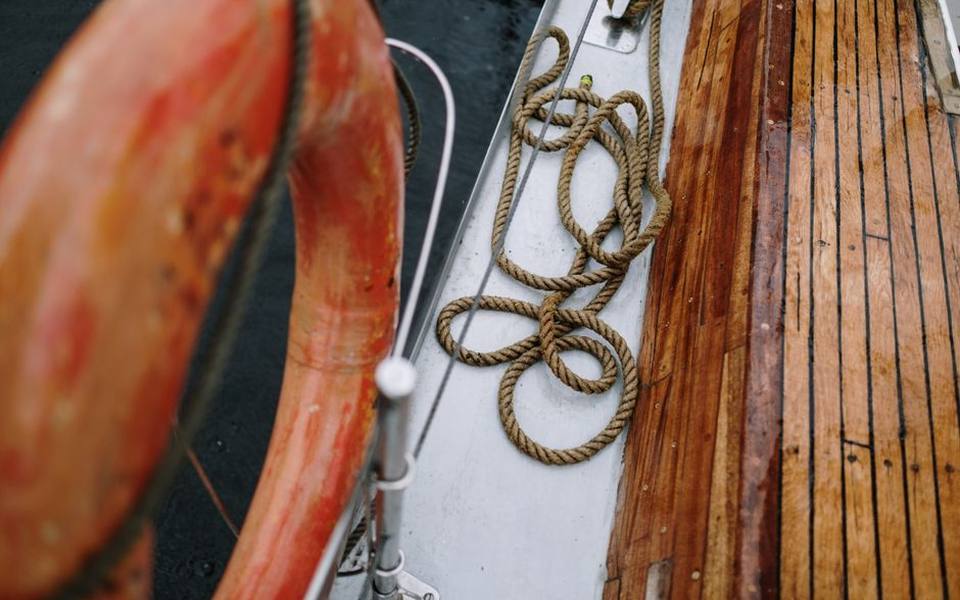
A reliable safety checklist starts with personal flotation devices, which must be Coast Guard-approved, correctly sized, and in serviceable condition without rips or broken buckles. Vessels sixteen feet and longer—with the general exception of canoes and kayaks—must also carry at least one throwable Type IV flotation device, such as a buoyant cushion or ring buoy. These cushions must sit unfastened in the cockpit or helm area so anyone on deck can toss them instantly to a person in the water.
Visual distress signals represent another critical checklist category for vessels navigating coastal waterways, the Great Lakes, or open territorial seas. Handheld red flares, floating orange smoke canisters, or approved modern electronic distress lights fulfill night and day requirements depending on their ratings. Pyrotechnic flares typically carry a strict three-year expiration date stamped directly on the casing. Carrying expired flares does not satisfy marine law enforcement inspections, so checking these dates annually every spring remains an essential ownership habit.
Fire safety gear and audible signaling complete the mandatory onboard list for powerboats. Outboard and inboard boats with enclosed fuel compartments, living spaces, or built-in fuel tanks must carry portable marine-grade fire extinguishers rated for fuel and electrical fires. In addition, every vessel needs an efficient sound device, such as an electric horn or an athletic whistle, capable of producing an audible four-second blast. Power-driven boats operating between sunset and sunrise must also display working red, green, and white navigation lights.
Recommended Gear Beyond the Legal Minimum
Relying strictly on the legal minimum safety gear leaves skippers unprepared for common mechanical breakdowns and rapidly changing weather conditions. A practical seamanship kit should always include an anchor suited to the bottom conditions, paired with an adequate length of galvanized chain and nylon rode. Losing engine power in a swift current or heavy wind can push a disabled boat onto rocks within minutes, making an easily deployable ground tackle system one of your best secondary safety assets.
Marine electronics and communication gear also provide an extra layer of protection far beyond what standard regulations require. A fixed-mount or handheld VHF radio lets you hail the Coast Guard or commercial towing operators directly on Channel 16, functioning reliably in areas where mobile phones lose cellular reception. Marine GPS plotters, backup magnetic compasses, and waterproof depth finders help you avoid grounding on submerged sandbars or navigating outside marked channels during dense coastal fog.
Rounding out your vessel kit requires basic repair items, bailing tools, and trauma care gear that can handle unexpected onboard incidents. A comprehensive marine first aid kit packed in a waterproof case should be stored near the companionway. You should also carry a high-output manual bilge pump, a heavy-duty flashlight, spare fuses, stainless hose clamps, and basic hand tools sourced through a local parts counter to handle minor hose leaks or loose battery terminals while offshore.
State Boater Education Laws and Course Structures
Over the past two decades, nearly every state has introduced mandatory boater safety education laws, commonly referred to as boater card or boating license requirements. These statutes rarely require a commercial captain's license for recreational use, but they do mandate that operators pass an approved foundational course. In many jurisdictions, these laws are phased in by birth year, meaning younger operators face mandatory certification while older skippers may occasionally be grandfathered, depending on local statutory language.
Approved courses follow strict standards established by the National Association of State Boating Law Administrators in cooperation with the Coast Guard. The curriculum covers navigation rules of the road, buoyage systems, safe trailering, wake courtesy, fueling protocols, and emergency procedures. Completing an approved course awards a permanent card or endorsement on your state driver's license, which is typically recognized across state lines under reciprocal agreements when trailering your boat to neighboring waters.
Beyond fulfilling legal requirements, completing an accredited education course offers immediate financial benefits for vessel owners. Most marine insurance underwriters provide discounts ranging from five to fifteen percent on annual physical damage and liability premiums once you submit proof of course completion. For owners financing newer or higher-value boats, these recurring premium savings help offset annual operational costs and demonstrate responsible ownership to lenders reviewing loan files.
Boater Safety Course Duration: Online Versus Classroom
Prospective boaters frequently ask how much time they must dedicate to earn their state certification. A standard in-person classroom course typically takes between six and eight hours of instruction, often scheduled as a single full-day Saturday seminar or split into two evening sessions. In-person courses are commonly hosted by local Coast Guard Auxiliary flotillas, state wildlife conservation agencies, or community education centers, providing valuable opportunities to ask instructors region-specific navigation questions.
Online boater safety courses offer a flexible alternative, generally requiring between three and five hours of active engagement depending on your reading speed and familiarity with nautical terminology. Most state-approved online learning modules incorporate mandatory timers on each study chapter to ensure students spend adequate time absorbing the material. Because these platforms save your progress automatically, you can complete the modules in short twenty-minute intervals across several evenings on a tablet or computer.
The digital format concludes with an un-timed or gently timed multiple-choice exam covering navigation markers, right-of-way scenarios, and safety gear rules. Most online platforms require an eighty percent score to pass, allowing immediate retakes if you miss a few questions on your first attempt. Once you pass, you can print a temporary certificate immediately, allowing you to operate legally on the water while your official state plastic credential processes in the mail.
Incorporating Safety and Rigging Into Your Vessel Budget
When planning a boat purchase, buyers often focus exclusively on the agreed hull and motor price, forgetting that safety gear, lines, and rigging represent immediate out-of-pocket expenses. Equipping a twenty-foot bowrider or center console with fresh life vests, dock lines, an anchor, visual flares, fenders, and safety electronics typically adds several hundred to a few thousand dollars to your maiden voyage costs. Budgeting for these necessities upfront prevents unpleasant financial surprises after delivery.
Marine lenders and retail dealers frequently allow buyers to roll basic safety accessories and electronics packages directly into the primary vessel contract. Outfitting the boat completely prior to closing allows you to finance life vests, chartplotters, and VHF radios under the same fixed interest rate as the hull itself. Exploring packages with boat dealers offering financing can make high-end safety installations, such as emergency beacon transponders or radar domes, substantially more manageable on a monthly basis.
In addition to initial outfitting, marine gear requires scheduled maintenance and periodic replacement throughout your ownership journey. Fire extinguishers have serviceable lifespan limits, inflatable life jacket CO2 cylinders must be inspected annually, and visual distress flares expire on a rolling schedule. Factoring these minor recurring maintenance expenses into your seasonal budget ensures your boat remains completely compliant and safe year after year.
How Boat Loan and Monthly Payment Calculators Work
Navigating the financial side of boat buying requires a clear understanding of marine lending mechanics. Prospective buyers frequently use a boat loan payment calculator or monthly note calculator to estimate their recurring commitments before stepping into a showroom. These financial tools calculate your amortized monthly payment by analyzing four central figures: the net purchase price after down payment, the agreed loan term in months, the annual percentage rate, and any state sales taxes or documentation fees.
Marine loans differ significantly from standard automobile financing because watercraft generally hold value over longer lifespans and carry different depreciation curves. While passenger car loans rarely stretch beyond five or six years, recreational boat notes typically range from ten to twenty years for higher-ticket purchases. Extending the loan term reduces your monthly payment substantially, but it increases the cumulative interest paid over the life of the loan, which a good calculator makes clear.
When running estimates through a payment calculator, experimenting with different down payment amounts provides valuable insight into your monthly note. Most marine lending institutions look for a cash down payment or equity trade-in of ten to twenty percent of the vessel's purchase price. Putting down more cash reduces the principal balance, protects you against rapid depreciation, and frequently unlocks better interest rate tiers from marine underwriters.
Sailboat and Yacht Financing Calculations
Financing a cruising sailboat or an offshore motor yacht involves specialized underwriting parameters compared to purchasing a production runabout or fishing skiff. Buyers exploring larger vessels rely on a sailboat financing calculator or yacht loan calculator to project long-term payments on balances that routinely reach six or seven figures. Because these larger vessels feature complex mechanical, plumbing, and electrical systems, lenders scrutinize the vessel's survey condition and structural integrity alongside the buyer's credit profile.
Loan terms on cruising sailboats and yachts often extend out to fifteen or twenty years, keeping monthly notes predictable for long-distance cruisers and liveaboard owners. However, operating a larger vessel involves secondary ownership expenses that must be factored into your calculations alongside the bank note. Marina slip fees, seasonal haul-outs, rigging inspections, and commercial insurance policies represent substantial recurring commitments that run parallel to the loan principal and interest payments.
To secure financing on an older sailboat or custom yacht, lenders nearly always require an independent Marine Survey conducted by a certified marine surveyor. The surveyor inspects the hull, deck core, standing rigging, propulsion machinery, and onboard safety equipment to verify the vessel's current fair market value. Lenders base their maximum loan-to-value percentage on the surveyor's valuation rather than the seller's asking price, making the survey a decisive factor in loan approval.
Marine Mortgages and Understanding Interest Rates
When financing high-value vessels, buyers often encounter the term preferred ship mortgage, which functions much like a traditional real estate mortgage. Vessels that are documented with the United States Coast Guard rather than titled through an individual state allow the bank to record a formal maritime lien against the hull. Utilizing a boat mortgage calculator helps buyers evaluate whether the lower interest rates and tax considerations sometimes associated with documented vessels justify the initial legal documentation fees.
Marine interest rates fluctuate based on broader economic monetary policies, the borrower's credit score, loan duration, and the age of the boat. A boat loan rates calculator demonstrates how a variance of even one or two percentage points impacts your total financing costs over a fifteen-year term. In general, brand-new vessels qualify for the lowest rates, while vessels older than ten to fifteen years may carry slightly higher rates and shorter amortization schedules.
Before finalizing a loan agreement, consult with specialized lenders or explore dealerships offering marine loans and financing to compare fixed-rate options against variable products. Fixed-rate marine loans remain the industry standard for recreational boaters, providing an unvarying monthly payment that insulates your recreation budget from shifting market rates throughout your ownership tenure.
Pre-Departure Verification and Working With Marine Pros
Having a complete inventory of safety gear means very little if items remain tucked away inside hard-to-reach storage lockers when an emergency strikes. Before untying lines from the dock, responsible skippers conduct a quick pre-departure briefing with everyone aboard. Show guests where adult and child life jackets are stowed, point out the fire extinguisher locations, and explain how to operate the VHF radio or shut off the engine if the captain suddenly becomes incapacitated.
Periodic inspections by marine professionals provide added confidence that your safety gear, steering cables, fuel lines, and electrical systems remain in seaworthy condition. Scheduling an annual multi-point inspection with a certified service department allows trained marine mechanics to identify subtle problems, such as fuel vapor leaks, cracking exhaust bellows, or corroded bilge float switches, before they create hazardous conditions offshore.
Ultimately, blending rigorous safety gear preparation with a clear understanding of your vessel's operational and financing budget creates a worry-free ownership experience. When your mandatory equipment is fully organized, your boater education credentials are secured, and your monthly boat note is comfortably calculated, you can pull away from the ramp with complete peace of mind, focusing entirely on enjoying your time on the water.
Published 2026-09-20 · reviewed with each rebuild, last September 2026.
Find boat dealers near you
The directory lists 7,311 boat dealers by state and city — pick your state or use the “Near me” button in the header.
More guides
-
 Storage
Boat Storage and Slip Costs: Dry Storage, Mooring, and Marina Rates Guide
-
 Money
MoneyHow Much Does a Boat Engine Cost? Complete Marine Motor Pricing Guide
-
 Buying
How Much Does a Pontoon Boat Cost to Buy or Rent?
-
 Service
Cosmetic Maintenance, Surface Repairs, and Deck Restorations: A Practical Marine Guide
-
 Owning
Marine Electrical Systems, Critical Hardware, and Modern Repower Planning
-
 Service
Essential Boat Mechanical Repairs: Managing Cables, Pumps, and Routine Service
-
 Owning
Understanding Your Boat's Plumbing, Fuel Systems, and Ownership Costs
-
 Owning
How to Handle Boat Registration, Title Transfers, and USCG Documentation
-
 Owning
Complete Off-Season Preparation: Storage Steps, Costs, and Protective Canvas
-
 Money
MoneyUnderstanding Marine Loans: Rates, Terms, and Approval
-
 Buying
Center Console vs. Bowrider Boats: Layouts, Costs, and Finding the Right Fit
-
 Safety
How to Tow a Boat Safely and Maintain Trailer Wheel Bearings
-
 Buying
What Is a Marine Survey and How Much Does It Cost?
-
Buying
Yacht Buying, Chartering, and Brokerage Guide
-
Owning
Boat Trailers, Launching, and Ramp Etiquette Guide
-
Buying
Complete Used Boat Buying Guide: Valuations, Inspection, and Bill of Sale
-
Buying
The Complete Pontoon and Tritoon Guide: Layouts, Brands, and Ownership
-
Buying
Jon Boats and Small Aluminum Fishing Boats: Complete Buyer and Build Guide
-
Buying
Bass Boats and Freshwater Fishing Boats Buyer's Guide
-
Buying
Outboard Motors Guide: Yamaha, Suzuki, Mercury Specs and Used Buying
-
Money
Navigating Boat Loans and Marine Financing: Rates, Loan Terms, and Monthly Payment Realities
-
Owning
Boat Clubs vs. Rentals and Charters: Which Waterway Option Fits You?
-
Service
The Complete Guide to Boat Maintenance, Winter Storage, and Mechanical Repairs
-
 Safety
Boating Safety Courses, Licenses, and Certification Guide
-
Buying
Catamarans Guide: Sailing, Power, Hobie, and Buying Options
-
Owning
Marine Batteries Buyer's Guide: Deep Cycle, Lithium, AGM, and Dual Purpose
-
Buying
Electric Trolling Motors: Complete Guide for Kayaks, Pontoons, and Fishing Boats
-
 Owning
Complete Boat Rental Guide: Destinations, Types, and Rates
-
 Service
Boat Fuel Systems and Injector Care: Tanks, Filters, and Cleaning
-
 Buying
Center Console Boats: Types, Construction, and Buying Guide
-
 Owning
Boat Docks, Lifts, and Flotation Systems: Complete Waterfront Guide
-
 Buying
A Complete Guide to Fishing Boats, Sonar Electronics, and Rod Rigging Systems
-
 Owning
Outboard Motors, Jack Plates, and Marine Propellers: The Complete Rigging Guide
-
 Buying
A Complete Guide to Boat Brands, Marine Brokers, and Finding the Right Dealer
-
 Money
MoneyBoat Insurance, Financing, and Title History Lookup: Complete Guide
-
 Buying
Small Boats, Kayaks, Canoes, and Inflatable Craft: Complete Buyer and Rigging Guide
-
 Owning
Marine Canvas, Bimini Tops, and Boat Covers: Selection and Care Guide
-
 Buying
Complete Guide to Boat Shows: Dates, Tickets, and Top US Events
-
 Owning
Boat Anatomy 101: Hull Parts, Steering Wheels, and Terminology